
Just a decade ago, investing in a farmhouse or a weekend home was uncommon. It was largely viewed as an ultra-luxury choice reserved for HNIs. But after the pandemic hit hard and with the rise of gated community farmhouse living, even middle-class families now think about owning a farmhouse outside the city. Today, people are not just dreaming; they’re buying, settling in and finally living that peaceful life they once imagined.
Buying a farmhouse means different things to different people. For some, it’s a quiet escape for weekend breaks; for others, it’s a calm place to retire. And for many, it’s a smart long-term investment that grows in value over time. Whatever your reason, it’s important to understand a few key factors before making such a big and meaningful purchase.
Why the Demand for Farmhouses is Skyrocketing
A farmhouse offers a unique combination of privacy, immense space and an invaluable connection with nature. Unlike small apartments or crowded neighbourhood homes, a farmhouse offers plenty of room for gardening, outdoor activities or even earning extra income through organic farming.
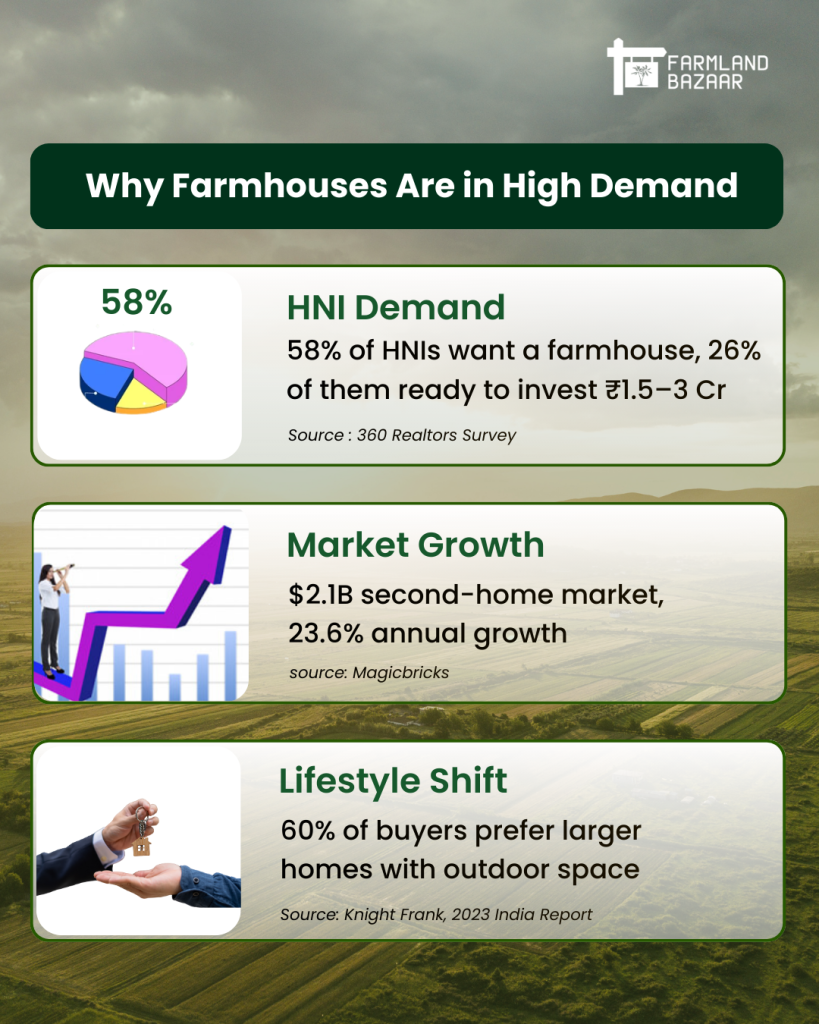
At the same time, farmhouses have become a smart investment choice. Post-pandemic lifestyle changes have pushed more buyers toward spacious, nature-friendly living. Surveys show that 58% of India’s HNIs now want to purchase a farmhouse, and 26% are ready to invest ₹1.5 crore to ₹3 crore. The second-home market, which includes farmhouses, has already crossed $2.1 billion and is growing at 23.6% annually. With remote and hybrid work becoming permanent for many, 60% of homebuyers now prefer larger homes with outdoor spaces.
This growing demand is supported by strong financial performance. Farmhouses have delivered stronger returns than many traditional investments over the last ten years. Recent real estate analysis shows some powerful reasons behind this:
High Rental Income
Farmhouses earn excellent short-term rental income. A well-kept farmhouse near Bengaluru or Pune can make ₹50,000 to ₹2 lakh per weekend through events, staycations and corporate retreats. This is far higher than the usual 3% to 5% rental yield from regular residential properties.
Tax Benefits
For wealthy investors, agricultural land comes with special tax advantages. Agricultural income is tax-free, and under Section 54B, capital gains can also be exempt if the money is reinvested into a larger piece of agricultural land.
Strong Stability
Land is a physical asset. It holds value even during economic ups and downs, making it a strong hedge against inflation and a reliable part of any long-term investment portfolio.
Essential Factors to Consider Before You Buy a Farmhouse
1. Location: Proximity and Growth Potential
The first and most crucial factor is location. Look for farmhouses that are within a two-to-three-hour driving distance from your city or main workplace. Accessibility to major roads, reputable hospitals, markets, and key infrastructure is important if you plan to use it regularly. These conveniences make life easier and increase the property’s value over time.
Properties, especially gated and managed farmland and farmhouses, that are close to major cities or upcoming economic corridors usually grow much faster in value. For example, according to Times Property, farmland in peri-urban areas around Bengaluru has seen prices triple every five years since 2001.
2. Purpose: Personal Use vs. Capital Gain
Clarify your motivation for buying a farmhouse:
Personal Use / Lifestyle
If you want a peaceful weekend home or a retirement escape, focus on natural beauty, security and comfortable lifestyle features. Look for places that offer lakes, large gardens, lush green spaces, options for organic farming and many leisure activities
Hosachiguru in Bengaluru or Kapil Farms in Hyderabad are few trusted and proven examples of gated, well-managed farmland communities. They provide full maintenance, security and all essential amenities. Because the management team takes care of everything, you can stay stress-free and enjoy holidays in a resort-like setting that too on your own property.
When choosing a lifestyle farmhouse, apart from developer’s track record always check:
● Proximity to your city
● Quality of amenities
● Roads, water, electricity
● Safety and long-term upkeep
These factors make your experience smoother and increase the property’s value over time.
Investment / Capital Gain
If your main purpose is returns, choose locations with strong growth potential. You can consider teakwood farmland projects. These properties may or may not offer many lifestyle amenities and are usually farther from the city, but they have long-term financial advantages, if the location has growth potential, like upcoming infrastructure. Teak plantations generate steady income over the years, and as the plantation matures, the land value also continues to rise. This gives you two benefits:
1. Land appreciation
2. Timber income
This combination makes teakwood farmland a popular choice among investors looking for long-term, stable growth.
3. Legal and Zoning Verification
For example, in Karnataka, usually only about 10% of agricultural land can be used for building a house. To avoid future problems, it is essential to consult a qualified real estate lawyer before closing any farmhouse-for-sale deal.
Always verify the land’s zoning regulations. For instance, in Karnataka, only a maximum of 10% of the land can typically be built up for residential use.Many states have similar rules that limit construction on farmland and you must confirm that the plot can legally be used for residential construction. Consulting a qualified real estate legal expert is strictly non-negotiable before finalizing any deal for a farmhouse for sale.
4. Infrastructure and Amenities
Modern farmhouses often include useful amenities such as gated security, good roads, a steady water supply, dedicated electricity and professional maintenance. These features significantly
add value and comfort, especially if the farmhouse is intended for frequent family visits or for generating rental income.
Tips for Buying a Farmhouse: Where to Start Your Search
1. Start with Farmlandbazaar: To avoid sifting through endless, unqualified listings, begin your search on a specialized platform. Farmlandbazaar is an excellent place to start as it focuses exclusively on farmlands and farmhouses, allowing you to quickly qualify desired properties based on location, amenities, Price and legal status right from your laptop.
2. Research Thoroughly: Check multiple listings for farmhouse for sale near your preferred area. Compare prices, amenities and confirmed legal status. And make a wishlist.
3. Budget Wisely: Always include additional costs in your budget, such as property taxes, development charges, potential fencing costs and ongoing maintenance
4. Visit the Sites (Multiple Times): Inspect the land and existing structures personally and assess the terrain, soil quality, water availability (borewell depth) and surroundings.
5. Plan for Future Development: Consider potential urban growth in the area and how it may positively affect the property’s value in the next 10-15 years.
Conclusion
Whether you’re looking to buy a farmhouse as a personal sanctuary or as a powerful long-term investment, careful and fact-based planning is crucial. Farmhouses uniquely offer a blend of lifestyle and financial benefits, from peaceful living in nature to significant capital appreciation and high event-based rental income. With the right location, rigorous legal checks and necessary amenities, a farmhouse is a rewarding and stabilizing addition to your property portfolio.
If you are considering making the move, start by exploring trusted farmhouse for sale listings, perhaps beginning with a specialized site like Farmlandbazaar. With rising demand and limited premium supply, securing the right farmhouse today can mean owning both a sanctuary and a truly smart investment for the future.

Leave a Reply